
The Last Class
Robert Reich’s Farewell to Teaching, But Not to Service
WRITERS AT HEADS UP
6/27/20253 min read
The Last Class: Robert Reich’s Farewell to Teaching, But Not to Service
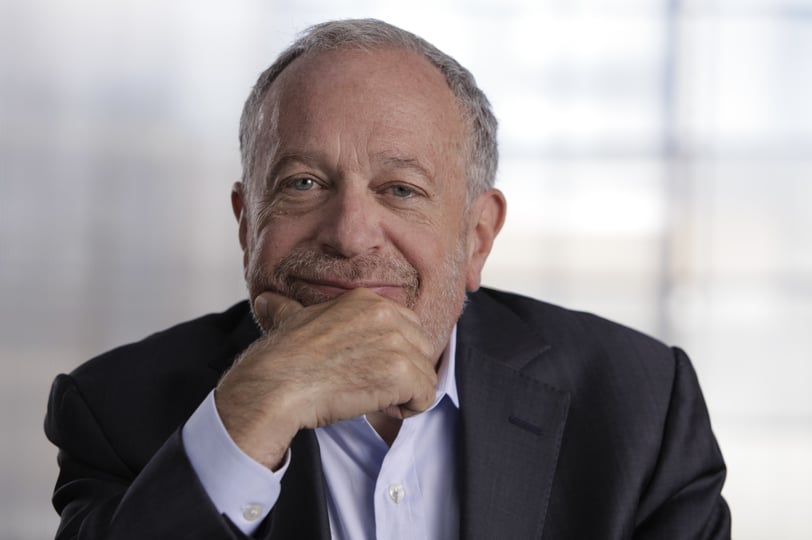
For more than four decades, Robert Reich has worn many hats. Former Secretary of Labor under President Clinton, economic adviser to President Obama, author of 19 books, and a social media powerhouse with over 10 million followers. Yet when asked how he defines himself, Reich doesn’t lead with titles from Washington or accolades from media platforms. Instead, he says, “I’m a teacher.”
And now, as a new documentary titled The Last Class captures, that chapter is coming to an end.
“I’ve been a teacher for 42 years,” Reich shares in the opening scenes of the film. “And I can’t imagine not doing it. I still feel that excitement, that energy.” He reflects on a lifetime not just spent in policy rooms but in classrooms, guiding 40,000 students through the complexities of economics, democracy, and civic responsibility.
When strangers ask if he has retired, he admits resisting the urge to react with frustration. Teaching, for Reich, is not just a job. It is a calling.
Why Teaching Comes First
Despite his remarkable list of accomplishments, Reich says teaching remains the most important work of his life — second only to being a father. “It’s the most generative thing I’ve ever done,” he explains. “I don’t think there’s anything more important someone can do if they are able.”
So why step away now?
His answer is refreshingly humble. “Unlike some politicians, I believe there comes a time when you can’t do your best work, and it’s not fair to the students. I didn’t want to leave, but I knew it was time.”
It is a decision that intertwines the reality of aging with the natural closing of life’s chapters. As Reich openly shares, the later years of life are not about endless growth but about finding grace in endings. Saying goodbye to the classroom is a loss — one that he does not pretend to take lightly.
The Heart Behind the Film
Heather Kinlaw Lofthouse, executive producer of The Last Class and a former student of Reich’s, describes the film as a window into a lesser-seen side of a very public figure. “So many know him for his economic breakdowns on social media or his time in government, but this film lets you see Robert as a human being — someone making decisions about what it means to let go, and what kind of world his students are inheriting.”
The film is not just about one man’s retirement. It is a love letter to education and a reflection on its essential role in preserving democracy.
Director Elliot Kirchner encouraged the project from the start, believing that the story of Robert Reich’s last class carries lessons far beyond the walls of any university.
Education and Democracy — An Unbreakable Link
For Reich, the decision to make this documentary was not just about marking a personal milestone. It was about sounding an alarm.
“Our democracy is under huge stress,” Reich says. “And education is too. They are absolutely connected.”
The growing attacks on educators, the erosion of trust in academic institutions, and the creeping influence of authoritarianism are all part of the same dangerous pattern. Reich believes that when education suffers, democracy falters. When educators are silenced or devalued, the ripple effects are felt far beyond the classroom.
On Refusing to Submit to Tyranny
A recent post on his Substack, titled How Not to Submit to a Tyrant, takes direct aim at the news that Harvard University may be reopening negotiations with Donald Trump. Reich, who taught at Harvard, warns that institutions like Harvard must not bend under political pressure.
“Harvard should not negotiate. It does not have to. It must not legitimize Trump’s attempts to take over or undermine academic freedom. Because of its wealth and prestige, Harvard has a responsibility to provide cover to the rest of higher education,” Reich says bluntly.
It is another reminder that for Reich, teaching was never confined to the lecture hall. His lessons were always about empowering people to stand up, to think critically, and to defend democratic values.
A Message for Teachers — And All of Us
Asked what she hopes educators take from this film, Lofthouse reflects on the mindset Reich modeled for his students. “You can be pessimistic, and that might even make sense sometimes,” she says. “But you cannot be cynical. Cynicism makes us inactive. It convinces us nothing can change. This film reminds us we have to stay engaged — both in education and in democracy.”
A Closing Chapter, But Not the End
The Last Class opens this week in theaters across the country. It offers a poignant portrait of a man who spent his life not just explaining the economy, but teaching people how to think about power, justice, and community.
Robert Reich’s work is far from over. His new memoir, Coming Up Short: A Memoir of My America, is set for release this August. His writing continues. His voice remains strong.
But for the first time in 42 years, the chalkboard is clean, the classroom is quiet, and the last class has been dismissed — not because the work is finished, but because the torch is being passed.