
Supreme Court Ruling on Birthright Citizenship
What It Really Means
WRITERS AT HEADS UP
6/27/20254 min read
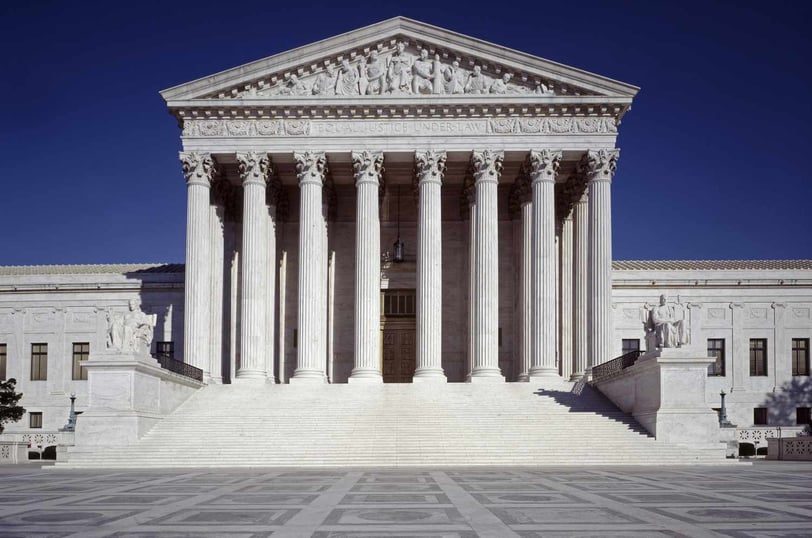
Supreme Court Ruling on Birthright Citizenship: What It Really Means
The Supreme Court has issued a landmark decision that reshapes not only the future of birthright citizenship but also the power balance between the courts and the executive branch. The ruling is already being described as one of the most consequential in years—not just for immigration law, but for how American law itself is enforced.
This case started with former President Trump’s executive order aimed at restricting birthright citizenship, a right guaranteed by the 14th Amendment. The order stated that children born on U.S. soil to parents who are not legal permanent residents would no longer be granted automatic U.S. citizenship.
To be clear, this ruling does not directly decide whether Trump's order is constitutional. Instead, it focuses on a procedural but powerful question: Can lower federal courts block a president’s executive order for the entire country, or only for the people directly involved in the lawsuit?
The Court’s Decision
In a 6-3 ruling along ideological lines, the conservative majority sided with the executive branch. The Court decided that lower courts cannot issue nationwide injunctions to block executive orders unless it is essential to provide complete relief to the specific plaintiffs in the case.
Put simply, the Court ruled that federal judges cannot stop a presidential order from applying to the entire country unless the people suing can prove they need that kind of relief. This doesn't strike down birthright citizenship itself, but it limits how courts can prevent the government from enforcing policies that may violate constitutional rights.
What Happens Next?
The executive order is not immediately in effect. The order contains a 30-day waiting period while the administration develops guidelines for how it would be enforced.
During those 30 days, lower courts will decide whether states involved in the lawsuits (like New Jersey and Massachusetts) can receive broader protections against the order, potentially creating a legal patchwork.
This could mean that a child born in one state is recognized as a U.S. citizen, while a child born under the same circumstances in another state is not.
If no broad injunction is issued, the order could take effect in states that didn’t sue to block it, leaving families scrambling to file new lawsuits for protection.
A Patchwork of Citizenship?
This is where the practical nightmare begins.
Imagine this: a woman from New Jersey, a state that challenged the order, gives birth in neighboring Pennsylvania, which did not. Is her child a citizen? As it stands, questions like this are unresolved.
The Court’s ruling sets the stage for a "Catch Me If You Can" legal system, where every affected individual or family might be forced to hire lawyers and file lawsuits to assert their constitutional rights. The dissenting justices were alarmed by this outcome.
Strong Dissents from the Liberal Justices
Justice Ketanji Brown Jackson wrote that the decision poses an “existential threat to the rule of law.”
Justice Sonia Sotomayor warned that “no right is safe” under the legal framework this ruling creates. In her view, the Court effectively empowers the executive branch to violate constitutional rights unless each affected person manages to file their own lawsuit in their own jurisdiction.
Justice Elena Kagan highlighted a simple but haunting question: If every lower court that reviewed this executive order ruled it unconstitutional, why should enforcement depend on whether you live in one state or another?
The Bigger Picture: More Than Birthright Citizenship
This decision isn’t just about immigration. It rewrites how much power lower courts have to check presidential overreach. Whether it's about gun control, healthcare, environmental rules, or abortion rights, the ability of a single federal judge to pause a federal policy nationwide is now severely limited.
Supporters of the decision argue that nationwide injunctions had become too powerful, allowing single judges to block entire federal policies. Critics say this ruling leaves vulnerable people defenseless against sweeping, unconstitutional actions—unless they can afford legal help.
What About the 14th Amendment?
The text of the 14th Amendment is crystal clear:
"All persons born or naturalized in the United States, and subject to the jurisdiction thereof, are citizens of the United States and of the State wherein they reside."
Legal scholars on both sides agree that this clause guarantees birthright citizenship, with very narrow exceptions (like children of foreign diplomats or enemy soldiers). That part of the law hasn't changed—yet.
But by focusing on procedural limits rather than the substance of the amendment, the Court has left the door open for further challenges. It hasn’t ruled on whether Trump’s executive order violates the Constitution. That fight is still to come.
A Victory for Executive Power
Legal analysts point out that this ruling isn’t just a win for Trump—it’s a win for any future president, Democrat or Republican, who wants to bypass court challenges more easily.
It weakens one of the judiciary’s strongest tools to immediately halt policies that may cause widespread harm. Whether that’s a good thing or a dangerous thing depends on where you stand on the role of government and the courts.
Closing Thoughts
For now, the fate of birthright citizenship hangs in legal limbo. What’s clear is that the rules of the game have changed.
The federal courts are no longer the firewall they once were against sweeping executive orders. Whether that leads to legal chaos, as some predict, or simply shifts how justice is sought, one thing is certain—the burden has been moved. Not off the government, but onto individuals.